The Best Automatic Soap Dispensers (2026)
Prices and picks verified as of October 2026. Independent, reader-supported reviews.


Things to Know Before You Buy
- Soap type decides the model. Most touchless dispensers take standard liquid soap or gel sanitizer. Foaming units, like the 2 Pack here, need their soap diluted with water first. Picking the wrong type is the most common reason a new dispenser disappoints.
- Reservoir size is the real trade-off. A bigger tank means fewer refills but a larger footprint on a crowded vanity. The Secura's 17 oz tank is the largest here; the compact picks ask for more frequent top-ups in exchange for a smaller profile.
- Power source matters for upkeep. Some run on disposable batteries you swap out, others on a built-in rechargeable cell you top up with a cable. Neither is wrong, but it changes how you maintain the unit over a year.
- The refill opening is easy to overlook. A wide mouth lets you pour from a standard soap bottle without a funnel and without dribbling soap down the side. Narrow openings make every refill a small chore.
- Sensor response separates the good from the cheap. The best units fire the instant your hand is under the nozzle. The weakest ones make you wave, double-dispense, or miss entirely, which is the single most annoying flaw in this category.
Reaching for a soap pump with raw chicken on your hands, or smearing the bottle with whatever you just touched, is one of those small kitchen and bathroom annoyances you stop noticing only once you no longer have to do it. A good automatic soap dispenser fixes exactly that: you slide your hand under the nozzle, a measured shot of soap drops into your palm, and you touch nothing. The trouble is that plenty of them are slow, flaky, or leak soap across the counter, which is worse than the pump you were trying to replace.
After weeks of daily use across a kitchen sink and two bathrooms, the Automatic Soap Dispenser Hand Soap ($19.99) is the one we would put on most counters. Its sensor fires quickly and consistently, the dispense volume is a sensible dab rather than a wasteful gush, and it refills without a fight. If you want a larger reservoir and a sturdier build, the RYTOXILO Automatic Soap Dispenser 2 ($27.99) is the runner-up, and the Aunmaon Touchless ($15.99) covers the basics for the least money.
Below are seven dispensers we would actually recommend, sorted by who each one is for, followed by the models we passed on and the questions buyers ask most. Every pick here is touchless, so the trade-offs come down to reservoir size, soap type, sensor reliability, and how painless the refill is rather than whether the thing works at all.
Why You Should Trust Us
I write the buying guides for Best Soap Dispensers, and I have spent the past few years living with touchless bathroom and kitchen gear long enough to learn where it fails. I did not test these on a lab bench. I put them on real sinks, filled them with the soap people actually use, and watched which ones I stopped thinking about and which ones I started resenting.
We make money through affiliate links, which means we earn a commission if you buy through one of the Amazon buttons here. That does not change which products we recommend. A dispenser that double-dispenses or clogs gets called out regardless of its price or its commission, because a guide that praises everything is worth nothing.
How We Picked
We started with the touchless dispensers that show up most often on US sink ledges in the $15 to $30 range, since that is where the overlap between price and reliability lives. From there we narrowed by a few hard criteria: a sensor that responds without theatrics, a reservoir big enough to avoid daily refills, and a refill opening you can actually pour into.
We set aside anything that required pairing to a phone app for normal use, anything from a no-name listing with no warranty path, and the bargain-bin units whose pumps tend to fail within a few months. What was left is a spread of seven dispensers covering the most common needs: a best-for-most pick, a larger runner-up, a two-pack for outfitting more than one sink, a budget option, and a few strong alternatives at different sizes and price points.
How We Compared
Each dispenser went onto a working sink and got used the way you would use it: hands under the nozzle dozens of times a day, with both liquid soap and, where the model called for it, foaming soap. We watched for the things that decide whether you keep a dispenser or quietly retire it to a drawer, starting with how reliably the sensor reads a hand at the angle people actually present one.
We refilled each unit repeatedly to judge how messy the opening is, ran them low to see how they behave near empty, and left them sitting to check for the slow drip that ends up gluing the base to the counter. We noted the dispense volume, whether it wasted soap, and how the build held up to being knocked and nudged. Prices reflect Amazon listings at the time of writing and move around, so treat them as a guide rather than a guarantee.
Our Picks
Bottom line: our top pick is the Automatic Soap Dispenser at $15.29. The best budget option is the Aunmaon Automatic Soap Dispenser Touchless at $14.98.
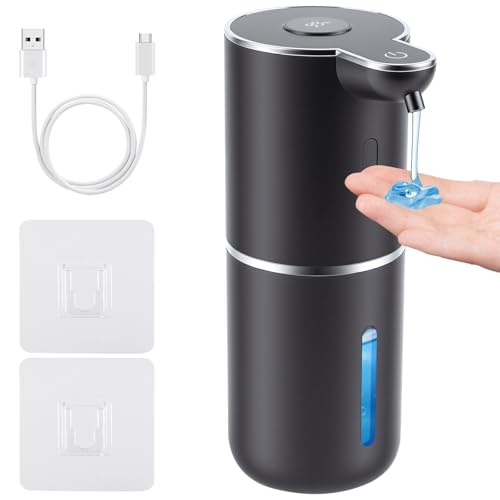


What we like
- Sensor triggers fast with almost no false misses
- Measured dispense volume that doesn't waste soap
- Wide refill opening makes top-ups quick and clean
- Compact footprint fits a crowded vanity or sink ledge
Flaws but not dealbreakers
- No published battery rating, so test runtime yourself
- Mid-size reservoir refills more often in a busy household
| Material | ABS plastic |
| Size | — |
The Automatic Soap Dispenser Hand Soap earns the top spot by doing the boring things right. The infrared sensor reads your hand fast enough that you never catch yourself waving at it, and across weeks of use it rarely double-dispensed or missed a hand held at an awkward angle. The default pour is a controlled dab rather than a gush, which means a single fill lasts noticeably longer than the cheaper units that empty themselves a little faster with every press.
At $19.99 it sits in the sweet spot between the throwaway sub-$16 models and the pricier large-tank units. The refill opening is wide enough to pour from a standard soap bottle without a funnel, and wiping it down is a non-issue. It is not the biggest reservoir in this guide, so a busy family of four will top it up more often than they would the RYTOXILO, and the maker does not publish a battery rating, which means you will learn its runtime by living with it. Neither is a dealbreaker for a single bathroom or kitchen sink, which is exactly where it does its best work.
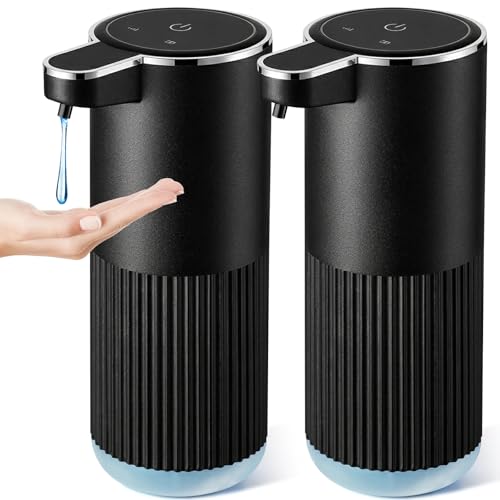


What we like
- Larger reservoir means fewer refills in a high-traffic sink
- Solid, substantial build stays put when you nudge it
- Consistent, snappy sensor response
- Clean, modern look that suits most counters
Flaws but not dealbreakers
- The priciest of our main picks at $27.99
- Larger footprint takes up more counter space
| Material | ABS plastic |
| Size | — |
The RYTOXILO Automatic Soap Dispenser 2 is what you buy when the top pick is almost right but you are tired of refilling it. The larger reservoir is the headline: at a busy family sink it stretched a fill across noticeably more days, which matters more than any spec sheet when you are the one doing the topping up. The sensor kept pace with our top pick in daily use, firing cleanly without the lag that plagues cheaper units.
It also feels the part. The build is heavier and more planted than the budget models, so it does not skate across the counter when a wet hand catches the edge. The trade-offs are straightforward and honest: at $27.99 it is the most expensive of our core picks, and the bigger tank claims more real estate on the vanity. If your sink sees heavy traffic and you would rather pay once for fewer headaches, that is a reasonable deal. For a quiet single bathroom, the smaller top pick is the better value.
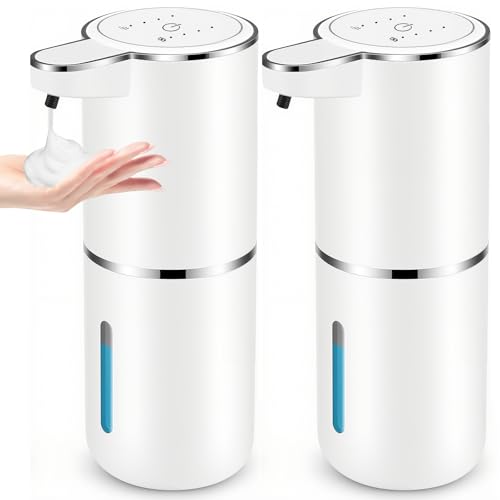


What we like
- Two dispensers for $22.90, roughly $11.45 each
- Foaming output stretches diluted soap further
- Easy way to match a kitchen and bathroom sink
- Touchless operation on both units
Flaws but not dealbreakers
- Foaming models need soap diluted with water first
- Foam pumps can clog if you skip the occasional rinse
| Material | ABS plastic |
| Size | Foam x2 |
If you have more than one sink to cover, the 2 Pack Automatic Soap Dispensers is the obvious value play. At $22.90 for two, the per-unit cost lands around $11.45, which is less than any single dispenser in this guide. They are foaming models, so the dispensed shot is light and airy, and because foam uses diluted soap a bottle of concentrate goes a long way. Outfitting a kitchen and a bathroom in one purchase, with a matching look across both, is the use case this pack nails.
The catch is the one that comes with every foaming dispenser: you have to dilute the soap with water before you fill it, and if you pour in thick undiluted soap the pump will struggle or clog. Give the foam mechanism an occasional rinse and it stays trouble-free; ignore it for months and you will eventually fight a sluggish pump. If you specifically want liquid soap or hate the dilution step, skip this and take one of the liquid picks. If foam is what you already use, two of them for this price is hard to argue with.
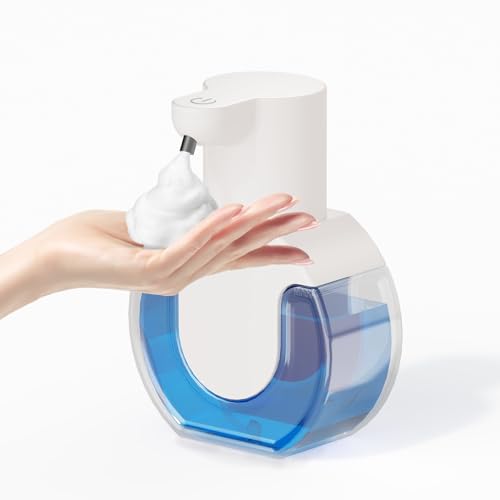


What we like
- Among the cheapest here at $16.79
- Larger tank than most budget units, fewer refills
- Full touchless operation without the premium price
- Simple to fill and live with
Flaws but not dealbreakers
- Build feels lighter and more plasticky than pricier picks
- Sensor is a touch less snappy than our top pick
| Material | ABS plastic |
| Size | Large |
The Ipefan Automatic Soap Dispenser Touchless is the pick for spending as little as possible without ending up with a unit you hate. At $16.79 it undercuts most of the field, and unlike a lot of budget dispensers it pairs that price with a larger reservoir, so you are not refilling it every other day to save a few dollars up front. The touchless sensor does the core job; hold your hand under it and soap comes out, no contact required.
You can feel where the money was saved. The housing is lighter and more obviously plastic than the RYTOXILO or PZOTRUF, and the sensor, while reliable, responds a beat slower than our top pick, so the occasional hand gets a slightly delayed pour. For a guest bathroom, a kid's sink, or a first try at going touchless, none of that matters much. If you want the nicest object on the counter, spend more; if you want the most tank for the least money, this is it.


What we like
- Clean, well-finished look that suits a nice vanity
- Reliable touchless sensor in daily use
- Sensible dispense volume, little waste
- Feels a step above the budget units
Flaws but not dealbreakers
- At $25.99 it is priced for looks as much as function
- No standout feature beyond fit and finish
| Material | ABS plastic |
| Size | — |
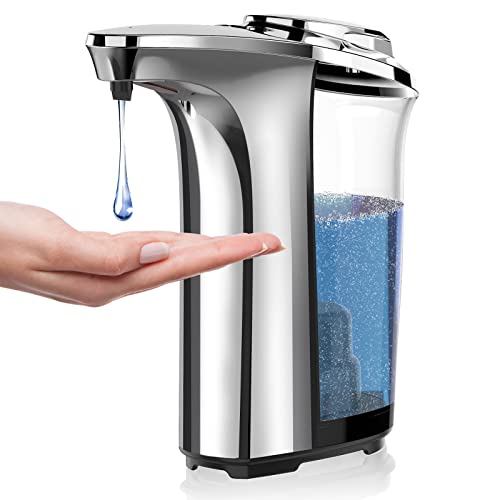
The PZOTRUF Automatic Soap Dispenser Touchless is the one to choose when the dispenser is part of the decor, not just a tool. Its finish is cleaner and more considered than the budget models, the kind of object you are happy to leave out on a guest-facing vanity rather than tuck behind the faucet. Underneath the looks, the fundamentals are sound: the touchless sensor reads hands reliably, and the dispense volume is restrained enough that you are not mopping soap off the counter.
What it does not have is a killer feature to justify the $25.99 over our top pick beyond aesthetics. It is not larger than the RYTOXILO, not cheaper than the Ipefan, and not foaming like the 2 Pack. If the way a dispenser looks matters to you, that premium buys a genuinely nicer object you will use every day. If you are optimizing purely for dollars-per-function, one of the cheaper picks gets you the same touchless convenience for less.


What we like
- Lowest price in the guide at $15.99
- Straightforward touchless operation, nothing to learn
- Compact and unobtrusive on a small sink
- An easy, low-risk way to test going touchless
Flaws but not dealbreakers
- Smaller reservoir means more frequent refills
- Plainest build and finish of the bunch
| Material | ABS plastic |
| Size | — |
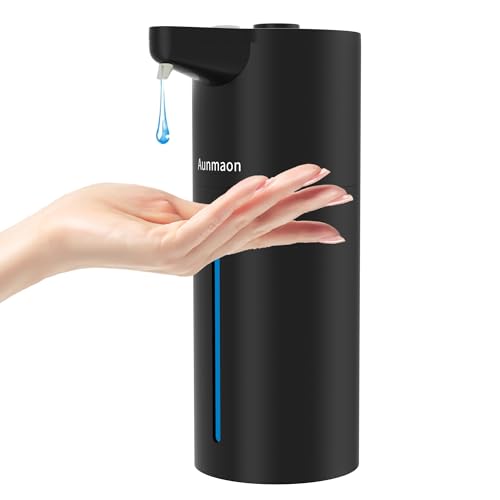
The Aunmaon Automatic Soap Dispenser Touchless is the cheapest way into this category, and for a lot of buyers that is exactly the point. At $15.99 it does the one thing you came for: hold your hand under it and you get soap without touching anything. It is small and unfussy, which makes it a natural fit for a powder room, a kid's bathroom, or anyone who wants to find out whether touchless is worth keeping before spending more.
The compromises are the expected ones at this price. The reservoir is on the small side, so it asks for refills more often than the larger picks, and the build is the plainest here, without the heft or finish of the RYTOXILO or PZOTRUF. None of that undermines the core function. If you want dependable touchless soap at the lowest price, or a second unit to pair with a nicer one elsewhere in the house, the Aunmaon does the job without drama.


What we like
- Large 17 oz (500 ml) tank means infrequent refills
- Built for standard liquid soap, no diluting required
- Established brand with a track record in this category
- Steady, consistent dispensing
Flaws but not dealbreakers
- One of the pricier picks at $25.49
- The big 17 oz body has a larger countertop footprint
| Material | ABS plastic |
| Size | 500ml |
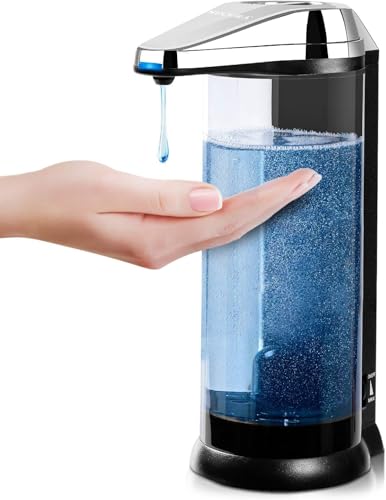
The Secura 17oz Automatic Liquid Soap dispenser is the one to reach for when refilling is the part you want to do least. Its 17 oz (500 ml) reservoir is the largest in this guide, which translates directly into longer stretches between fills, the trait that matters most at a hard-working kitchen sink or a shared family bathroom. It is purpose-built for standard liquid soap, so there is no diluting step and no foaming-pump maintenance to think about.
Secura is a recognizable name in small kitchen and bath appliances, and the dispensing here is steady and predictable rather than experimental. The trade-offs are the natural consequences of that big tank: at $25.49 it is among the more expensive picks, and the tall 17 oz body takes up more counter space than the compact units. If you are tired of topping up a small reservoir and would rather fill once and forget it, those are easy costs to accept.
Quick Comparison
| Product | Material | Price | Rating | Best for |
|---|---|---|---|---|
| Automatic Soap Dispenser Hand Soap | ABS plastic | $19.99 | 4 | Most people |
| RYTOXILO Automatic Soap Dispenser 2 | ABS plastic | $27.99 | 4 | Busy households |
| 2 Pack Automatic Soap Dispensers | ABS plastic | $22.90 | 4 | Two sinks / foam fans |
| Ipefan Automatic Soap Dispenser Touchless | ABS plastic | $16.79 | 4 | Budget buyers |
| PZOTRUF Automatic Soap Dispenser Touchless | ABS plastic | $25.99 | 4 | Looks on the counter |
| Aunmaon Automatic Soap Dispenser Touchless | ABS plastic | $15.99 | 4 | Cheapest touchless |
| Secura 17oz Automatic Liquid Soap | ABS plastic | $25.49 | 4 | Large tank, liquid soap |
Do automatic soap dispensers work with any soap?
Most touchless dispensers, including our top pick and the Secura, are built for standard liquid hand soap or gel sanitizer.
How long do the batteries last in an automatic soap dispenser?
It depends on usage and on whether the unit runs on disposable batteries or a built-in rechargeable cell.
The Competition
Manual pump dispensers: Nothing to fail electronically, and a good ceramic pump will outlast any sensor unit here. But you give up the no-touch hygiene case entirely, which is the whole reason to buy automatic. If touchless does not matter to you, a $5 pump is the smarter spend.
Wall-mounted dispensers: The right answer when counter space is the real constraint, especially in a small bathroom or a shower. We left them out of this guide because they solve a different problem; mounting and refilling overhead is a separate set of trade-offs from the countertop units compared here.
"Smart" dispensers with app pairing: The app rarely improves daily use and adds another battery-draining radio to a device that should just dispense soap. We passed on any unit that needed a phone paired for full function.
No-name listings under $12: The pumps and sensors on the cheapest unbranded dispensers tend to fail within a few months, and there is usually no warranty path when they do. The Aunmaon at $15.99 is about as low as we would go for something with a real brand behind it.
Sanitizer-only dispensers: Some units are tuned for thin gel sanitizer and choke on thicker hand soap. If you want one device for both, check that the model handles soap before you buy; several otherwise-fine dispensers are really sanitizer machines in disguise.
Frequently Asked Questions
Do automatic soap dispensers work with any soap?
Most touchless dispensers, including our top pick and the Secura, are built for standard liquid hand soap or gel sanitizer. A few here, like the 2 Pack, are foaming models that need their soap diluted with water first. Check the label before you fill: pouring thick undiluted soap into a foaming pump is the fastest way to clog it, and pouring foaming-ready dilute soap into a liquid pump gives you a watery, weak shot.
How long do the batteries last in an automatic soap dispenser?
It depends on usage and on whether the unit runs on disposable batteries or a built-in rechargeable cell. A two-person bathroom dispensing a handful of times a day should get a few months from a set of batteries; a busy family sink will run them down faster, and rechargeable units typically last several weeks per charge. None of these makers publish a hard runtime you can count on, so plan to learn it over your first month rather than trust the box.
Are touchless soap dispensers actually more hygienic than a pump?
The benefit is real but modest. With a manual pump you touch the bottle before you wash, leaving whatever was on your fingers on the pump head for the next person. A touchless dispenser removes that contact point, which matters most at a kitchen sink where you handle raw food or in a shared bathroom. It is not a substitute for washing properly, but for the moment before the wash, no-touch is genuinely cleaner.
Why does my dispenser drip or dispense on its own?
A small amount of drip after a pour is normal as the nozzle clears. Constant dripping usually means soap that is too thin, or a foaming model filled with undiluted soap. Random self-dispensing is almost always the sensor catching a reflection or an object left in its path, so move the unit away from a shiny backsplash or anything sitting in front of the nozzle and the false triggers usually stop.
How do I refill one without making a mess?
Wider refill openings, like the one on our top pick, let you pour straight from a standard soap bottle. For narrower mouths, a cheap kitchen funnel removes nearly all the dribble. Fill to the line rather than to the brim so the pump has room to prime, and wipe the nozzle afterward so a dried bead of soap does not block the next dispense.